
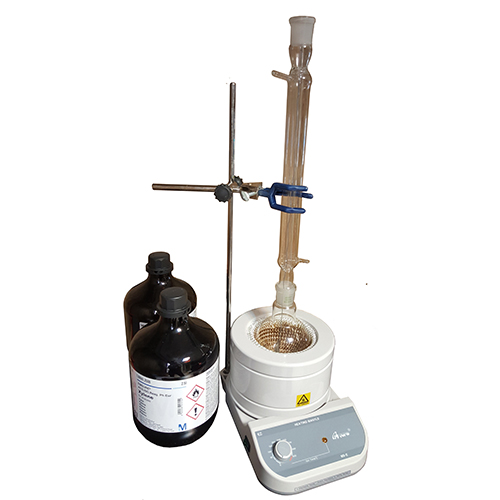
Introduction
Crosslinked polyethylene, commonly referred to as PE-X, is widely used in pressure piping systems, hot-water installations, underfloor heating, and other demanding applications where improved thermal and long-term mechanical performance are required.
One of the key quality parameters for PE-X is the degree of crosslinking.
The international standard ISO 10147:2004 specifies a method for assessing the degree of crosslinking in PE-X pipes and fittings by determining the gel content through solvent extraction.
In this method, the soluble fraction of the polymer is extracted in hot xylene, while the crosslinked, insoluble network remains. The mass of this insoluble residue is used to calculate the degree of crosslinking.
What Is Gel Content?
Crosslinking creates chemical bonds between polyethylene chains and forms a three-dimensional polymer network.
When a PE-X specimen is immersed in a suitable hot solvent:
- the soluble or insufficiently crosslinked fraction is extracted,
- while the crosslinked polymer network remains insoluble.
Therefore, the test result is expressed as the percentage by mass of insoluble material.
ISO 10147 defines the test principle by measuring the mass of a specimen before and after immersion in the solvent for a specified period. The degree of crosslinking is then expressed as the percentage by mass of the insoluble fraction.
Test Principle
The ISO 10147 procedure can be summarized as follows:
- Prepare a thin specimen from the PE-X pipe or fitting.
- Weigh the clean sample cage.
- Place the specimen in the cage and weigh again.
- Immerse the specimen completely in xylene.
- Reflux the xylene for the specified extraction period.
- Remove the insoluble residue.
- Perform a final rinse in boiling pure xylene.
- Dry the residue under specified oven conditions.
- Weigh the dried residue.
- Calculate the percentage of insoluble material.
The calculated percentage is reported as the degree of crosslinking, G.
Solvent Requirement
Xylene
The specified extraction solvent is: Analytically pure xylene
The xylene must contain: 1% antioxidant
The standard identifies suitable antioxidant systems including:
- 2,2-methylene-bis(4-methyl-6-t-butylphenol)
- 3-(3,5-di-t-butyl-4-hydroxyphenyl) propionate
- or a combination of both
The antioxidant is added to minimize unwanted degradation of the polymer during the high-temperature extraction process.
Safety Requirements
Xylene requires careful handling.
ISO 10147 specifically warns that xylene is:
- harmful,
- flammable,
- and capable of being absorbed through the skin.
The test should only be conducted in a properly ventilated fume hood.
Before starting the test, the effectiveness of the ventilation system should be checked.
Inhalation of xylene vapour should be avoided. Excessive vapour exposure may cause dizziness, headache, or both.
Equipment Required for ISO 10147
1. Reflux Condenser
A reflux condenser of the general type illustrated in Figure 1 of the standard is required.
Its function is to condense xylene vapour and return the solvent to the flask during the 8-hour extraction period.
2. Round-Bottom Flask
The extraction flask must have a capacity of at least: 500 mL
The standard notes that a: 2000 mL flask
is suitable for performing up to six determinations simultaneously. The flask should have a suitable connection for the reflux condenser.
3. Heating Mantle
The heating mantle must:
- fit the round-bottom flask,
- provide stable heating,
- and have sufficient capacity to boil xylene.
The boiling range specified for xylene is: 138°C to 144°C
A controlled heating system is important because the solvent must boil vigorously enough to create effective agitation throughout the extraction period.
4. Specimen Cage
The specimen must be held in a cage equipped with a lid. The cage must be large enough to contain the complete test specimen.
Cage Material
The cage may be manufactured from:
- aluminium wire cloth or mesh,
- or stainless-steel wire cloth or mesh.
Mesh Opening
The specified pore size is: 125 ± 25 µm
This mesh size allows dissolved polymer to leave the cage while retaining the insoluble gel fraction.
Cage Cleanliness
The cage must be free from:
- grease,
- oil,
- or other contaminants soluble in xylene.
If contamination is present, the cage must be: washed with acetone and dried before use.
This is an important quality-control requirement because contamination may directly affect the measured mass.
5. Specimen Preparation Equipment
The standard specifies: Lathe with automatic feed
for machining test pieces.
Alternatively:
- a microtome,
- or another suitable cutting tool
may be used. The standard recommends the use of a lathe for preparing test pieces from pipes.
For fittings, where specimen geometry may be more difficult, a microtome or other suitable cutting device may be necessary.
6. Drying Oven
ISO 10147 permits two different drying systems: Option A — Vacuum Oven
The vacuum oven must be capable of maintaining: 90 ± 2°C
under a vacuum of at least: 0.85 bar negative pressure, or 85 kPa
This corresponds approximately to: 0.15 bar absolute pressure or less.
The specimen must remain under these conditions for at least: 3 hours
Option B — Forced-Ventilation Oven
A forced-ventilation oven may also be used.
Required temperature: 140 ± 2°C
The oven must have an adequate extraction facility for removing solvent vapours.
7. Analytical Balance
The balance must be capable of weighing:
- the empty cage and lid,
- the cage with the original specimen,
- and the dried residue
with an accuracy of: 1 mg
This weighing accuracy is essential because the gel-content calculation is based directly on relatively small differences in specimen mass.
Extraction Apparatus Configuration
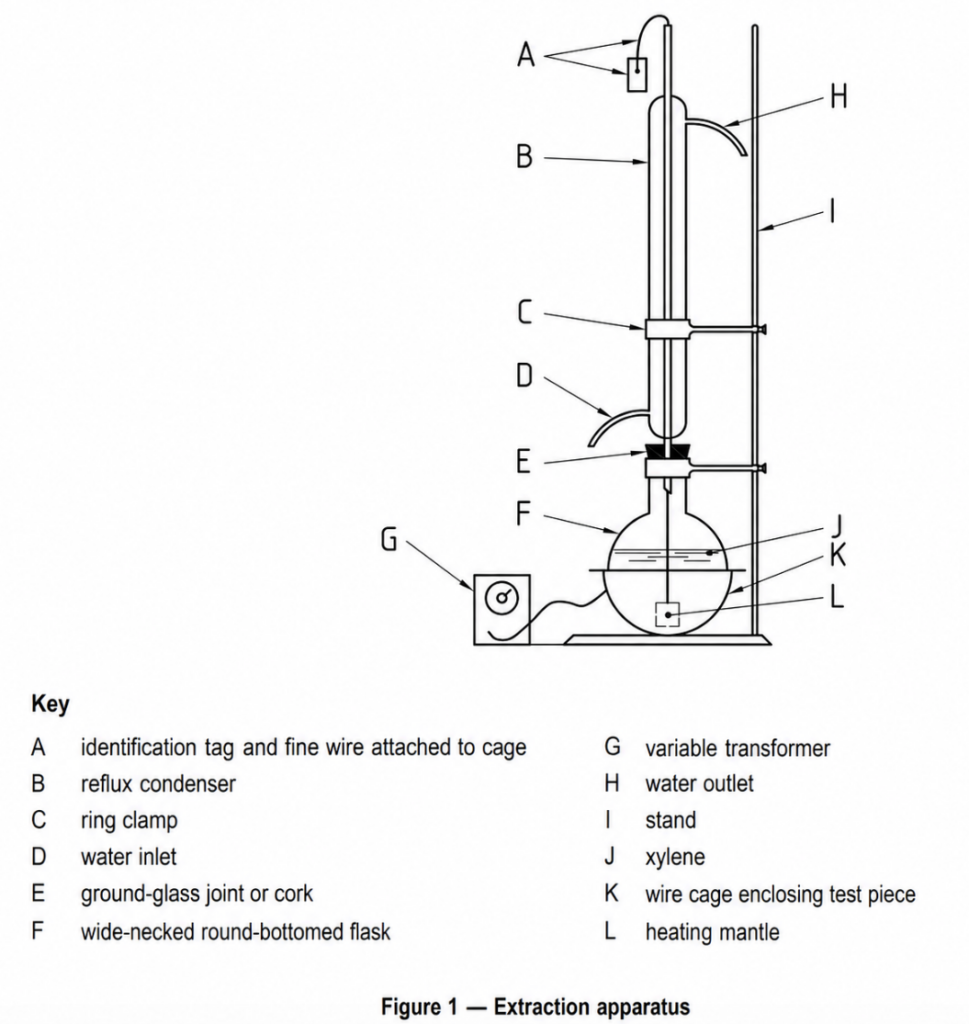
Figure 1 on page 6 of the standard shows the complete extraction arrangement.
The illustrated system includes:
- identification tag and fine wire attached to the cage,
- reflux condenser,
- ring clamp,
- water inlet,
- ground-glass joint or cork,
- wide-neck round-bottom flask,
- variable transformer,
- water outlet,
- support stand,
- xylene,
- heating mantle,
- and wire cage enclosing the specimen.
The specimen cage is suspended inside the xylene while the solvent is heated under reflux.
Preparation of Test Pieces
Correct specimen preparation is one of the most important parts of ISO 10147.
Removal of Protective Layers
Before preparing the actual test specimen: Any protective layer on the pipe or test sample must be removed.
This prevents coatings or protective materials from influencing the gel-content result.
Specimen Thickness
Each test piece must be a slice or shaving having a thickness of: 0.20 ± 0.02 mm
Accurate control of thickness is important because specimen geometry influences extraction efficiency.
Specimen Location
The specimen should be taken from a cross-section of the pipe or fitting and should include: the full wall thickness around at least one circumference
unless the referring product standard specifies otherwise. This approach provides a specimen representative of the complete wall section.
Minimum Specimen Mass
The standard requires a test-piece mass of: at least 0.2 g
Crosslinking Variation Through Pipe Wall Thickness
A particularly important point in PE-X testing is that the degree of crosslinking may vary through the pipe wall. ISO 10147 explicitly recognizes this possibility.
Therefore, if the objective is to determine crosslinking at a specific location such as:
- the inner surface,
- the outer surface,
- or the middle of the pipe wall,
the specimen must be machined accordingly. This requirement is especially important in production troubleshooting and process optimization.
Detailed ISO 10147 Test Procedure
Step 1 — Clean and Dry the Cage
Before starting the test, make sure the cage and lid are:
- clean,
- dry,
- and free from xylene-soluble contamination.
If necessary, clean the cage using acetone and dry it completely.
Step 2 — Weigh the Empty Cage
Weigh the clean and dry cage including its lid to an accuracy of: 1 mg
Record this mass as: m1
Therefore: m1 = mass of cage + lid
Step 3 — Add the Test Piece
Place the prepared PE-X test piece inside the cage.
Weigh: cage + lid + test piece
to an accuracy of 1 mg.
Record this mass as: m2
Therefore, the original test-piece mass is: m2 − m1
Step 4 — Place the Cage in the Extraction Flask
Transfer the cage containing the test piece into the round-bottom flask. Add enough xylene to maintain:
complete immersion of the specimen throughout the extraction process.
The specimen must not become exposed above the solvent level during extraction.
Step 5 — Solvent-to-Specimen Ratio
The ratio by mass of solvent to specimen must be at least: 200:1
For example, if the specimen mass is: 0.25 g
the minimum solvent mass would be: 50 g of xylene
However, sufficient solvent must also be present to maintain full immersion throughout the complete extraction period.
Step 6 — Start Reflux Extraction
Heat the xylene to boiling.
The solvent must boil: vigorously enough to ensure good agitation.
The specified extraction time is: 8 hours ± 30 minutes
During this stage, the non-crosslinked or soluble polymer fraction is progressively removed from the specimen. The crosslinked network remains as the insoluble residue.
Step 7 — Remove the Cage
After the specified extraction time, carefully remove the cage and the remaining residue from the boiling solvent. Extra care is necessary because the xylene and apparatus are at high temperature.
Step 8 — Final Rinse in Pure Boiling Xylene
This is an important step that should not be omitted. Two situations are possible.
Situation 1 — Residue Can Be Removed from the Cage
If the insoluble residue can be separated easily from the cage:
Place only the residue in pure boiling xylene for: 5 minutes
Situation 2 — Residue Cannot Be Removed from the Cage
If the residue cannot be separated from the cage and lid:
Place the complete: cage + lid + residue
assembly into pure boiling xylene for: 5 minutes
This final rinse helps remove remaining soluble polymer or contaminated extraction solvent.
Step 9 — Dry the Residue
After the boiling-xylene rinse, complete the drying using one of the approved methods. Vacuum Oven Method
Dry for at least: 3 hours
at: 90 ± 2°C
under: at least 0.85 bar vacuum
Forced-Ventilation Oven Method
Alternatively, dry in a forced-ventilation oven at: 140 ± 2°C
with adequate solvent-vapour extraction.
Step 10 — Cooling
After drying, allow the specimen or cage assembly to cool to: ambient temperature
before final weighing.
Weighing a hot specimen can introduce error because of thermal convection and instability of the balance reading.
Step 11 — Final Weighing
Two different weighing approaches are permitted.
Method 1 — Residue Only
If the dried insoluble residue has been removed from the cage, weigh it directly.
Record: m4 = mass of dried residue
Method 2 — Cage + Lid + Residue
If the residue remains attached to the cage:
weigh the complete assembly.
Record: m3 = mass of cage + lid + dried residue
All final measurements must be made to an accuracy of: 1 mg
Calculation of Degree of Crosslinking
The degree of crosslinking is designated: G
and is expressed as a percentage by mass of insoluble material.
Calculation When the Residue Is Weighed Separately
If only the residue is weighed: G = [m4 / (m2 − m1)] × 100
Where:
m1 = mass of cage and lid
m2 = mass of cage, lid and original specimen
m4 = mass of dried insoluble residue
The denominator: m2 − m1
represents the original specimen mass.
Calculation When the Cage and Residue Are Weighed Together
If the residue remains in the cage: G = [(m3 − m1) / (m2 − m1)] × 100
Where:
m1 = mass of cage and lid
m2 = mass of cage, lid and original test piece
m3 = mass of cage, lid and dried insoluble residue
Expression of the Result
The final degree of crosslinking must be expressed to the: nearest whole number
For example:
A calculated result of: 74.6%
would normally be reported as: 75%
according to the required reporting resolution.
Correction for Filler Content
ISO 10147 specifies that: the mass of any filler present in the material must be taken into account.
This is essential for filled PE-X compounds because an insoluble inorganic filler may remain after xylene extraction and could otherwise be incorrectly counted as part of the polymer gel fraction.
Example Calculation
Assume the following measurements:
m1 = 15.250 g
Cage + lid
m2 = 15.500 g
Cage + lid + original specimen
Therefore:
Original specimen mass: 15.500 − 15.250 = 0.250 g
After extraction and drying: m3 = 15.435 g
Therefore, dried insoluble residue: 15.435 − 15.250 = 0.185 g
Degree of crosslinking:
G = (0.185 / 0.250) × 100
G = 74%
This is the gel-content value before any required correction for filler content.
Critical Test Parameters
For reliable testing, the following parameters should be tightly controlled:
Specimen thickness: 0.20 ± 0.02 mm
Specimen mass: ≥ 0.2 g
Balance accuracy: 1 mg
Mesh pore size: 125 ± 25 µm
Solvent: Analytically pure xylene + 1% antioxidant
Minimum solvent/sample ratio: 200:1 by mass
Extraction time: 8 h ± 30 min
Final boiling-xylene rinse: 5 min
Vacuum drying: 90 ± 2°C, at least 3 h, ≥ 0.85 bar vacuum
or
Forced-ventilation drying: 140 ± 2°C
These parameters are central to obtaining repeatable and comparable gel-content results.
Common Sources of Test Error
Incorrect Specimen Thickness
A specimen outside the required: 0.20 ± 0.02 mm
range may change extraction efficiency.
Insufficient Solvent
The specimen must remain completely immersed and the solvent-to-specimen mass ratio must be at least: 200:1
Insufficient solvent can reduce the effectiveness of extraction.
Inadequate Reflux
The standard requires vigorous boiling to provide good agitation. Weak or unstable boiling may lead to incomplete extraction.
Incorrect Extraction Time
The required extraction period is: 8 h ± 30 min
Changing the extraction time may affect the measured gel content.
Contaminated Cage
Oil, grease, or xylene-soluble contamination on the cage can alter the measured mass.
Incomplete Drying
Residual xylene increases the final measured mass and can therefore cause an artificially high calculated degree of crosslinking.
Loss of Residue
Any loss of insoluble polymer during transfer, rinsing, or drying will cause the calculated gel content to be artificially low.
Ignoring Filler Content
If an insoluble filler is present and is not corrected for, the apparent gel-content result may be higher than the actual polymer crosslinking level.
Laboratory Equipment Specification Checklist
For a laboratory setting up ISO 10147 testing, the minimum system should include:
- Reflux condenser
- Round-bottom flask ≥ 500 mL
- Heating mantle suitable for boiling xylene
- Laboratory stand and clamps
- Stainless-steel or aluminium mesh cage
- Mesh opening: 125 ± 25 µm
- Automatic-feed lathe and/or microtome
- Analytical balance with 1 mg accuracy
- Vacuum oven capable of 90 ± 2°C and ≥ 0.85 bar vacuum
or:
- Forced-ventilation oven capable of 140 ± 2°C
- Fume hood suitable for xylene handling
- Suitable glassware for pure-xylene rinsing
- Appropriate PPE and solvent-handling equipment
Test Report Requirements
The ISO 10147 test report must contain:
- A reference to ISO 10147
- All details necessary to identify the test piece
- The measured degree of crosslinking, G
- Details of any deviation from the specified test procedure
- Details of any abnormal behaviour observed during testing
- The date of the test
A technically complete laboratory report should therefore allow another laboratory or quality engineer to understand exactly what specimen was tested and whether the standard procedure was followed without modification.
ISO 10147 Test Workflow
The complete test can be summarized as:
→ Prepare specimen
→ Weigh empty cage
→ Load and weigh specimen
→ Immerse in xylene
→ Maintain solvent/specimen ratio ≥ 200:1
→ Reflux for 8 h ± 30 min
→ Rinse in pure boiling xylene for 5 min
→ Dry under specified conditions
→ Cool to ambient temperature
→ Final weighing
→ Correct for filler if applicable
→ Calculate degree of crosslinking
→ Report G to the nearest whole number
Conclusion
ISO 10147:2004 provides a clearly defined solvent-extraction method for estimating the degree of crosslinking in PE-X pipes and fittings. Although the basic concept is straightforward, reliable results depend heavily on controlling several parameters:
- specimen location,
- specimen thickness,
- solvent purity,
- antioxidant concentration,
- solvent-to-specimen ratio,
- reflux conditions,
- extraction time,
- final rinsing,
- drying conditions,
- weighing accuracy,
- and filler correction.
The test is therefore not simply a “boil and weigh” procedure. It is a controlled gravimetric extraction method in which small deviations in specimen preparation or mass measurement can directly influence the reported gel content.
In simple terms:
Cut → Weigh → Extract → Rinse → Dry → Reweigh → Calculate
That is the core ISO 10147 workflow for evaluating the gel content of crosslinked polyethylene pipes and fittings.
