

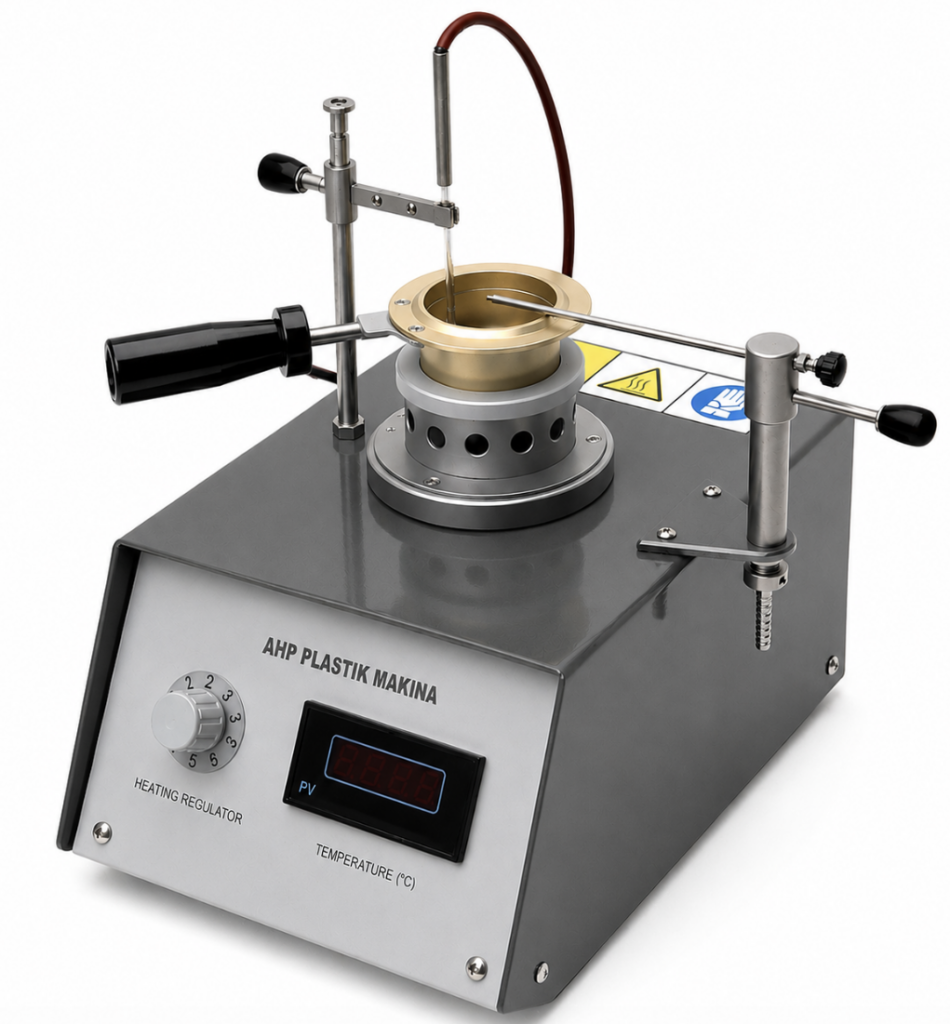
The Cleveland Open Cup (COC) Tester is used to determine the flash point and fire point of petroleum products under controlled laboratory conditions according to ASTM D92.
The method is particularly intended for petroleum products with flash points above 79°C (175°F) and below 400°C (752°F), subject to the applicability limitations specified by the standard.
What Is Flash Point?
The Flash Point is the lowest temperature, corrected to a barometric pressure of 101.3 kPa (760 mmHg), at which application of an ignition source causes the vapours above the test specimen to ignite under the specified test conditions.
During the test, a distinct flash propagating across the surface of the specimen indicates that the flash point has been reached.
A temporary blue halo or enlargement of the test flame alone is not considered a flash point.
What Is Fire Point?
The Fire Point occurs at a temperature above the flash point.
It is the lowest corrected temperature at which application of the ignition source causes the specimen to ignite and sustain burning for at least 5 seconds.
Therefore:
FLASH POINT → Momentary ignition
FIRE POINT → Sustained combustion for ≥ 5 s
Test Principle
Approximately 70 mL of the test specimen is introduced into the Cleveland open test cup.
The sample is heated at a controlled rate while its temperature is continuously monitored.
As the expected flash point is approached, a small test flame is periodically passed across the surface of the cup.
The vapours generated above the heated specimen are exposed to the ignition source.
The temperature at which a distinct flash occurs across the specimen surface is recorded as the observed flash point.
If fire point is required, heating and flame application continue until ignition results in sustained burning for at least 5 seconds.
Cleveland Open Cup Test Setup
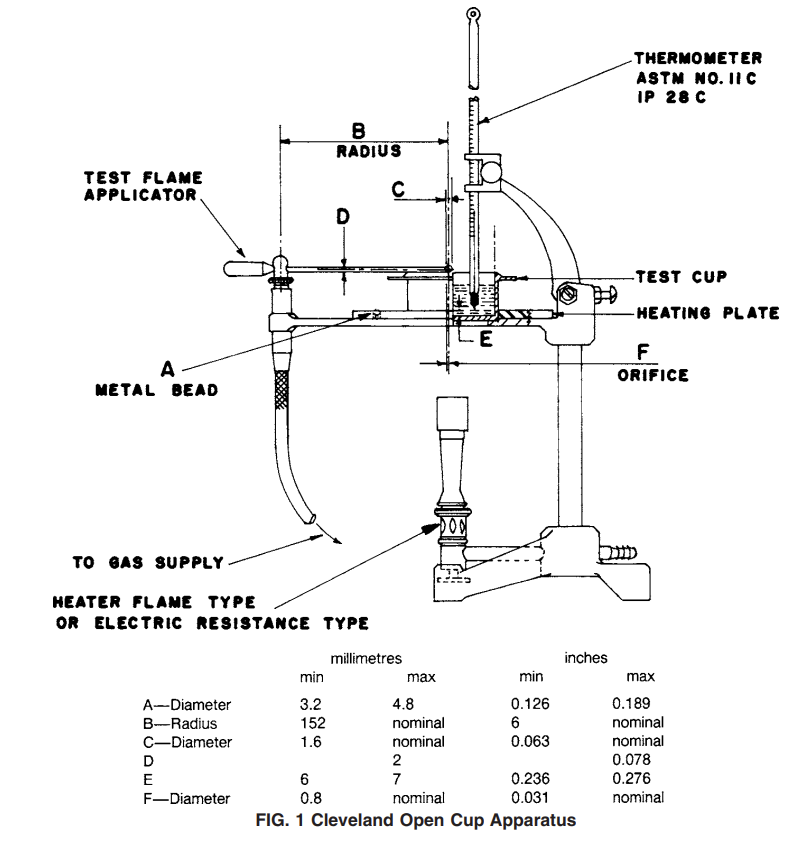
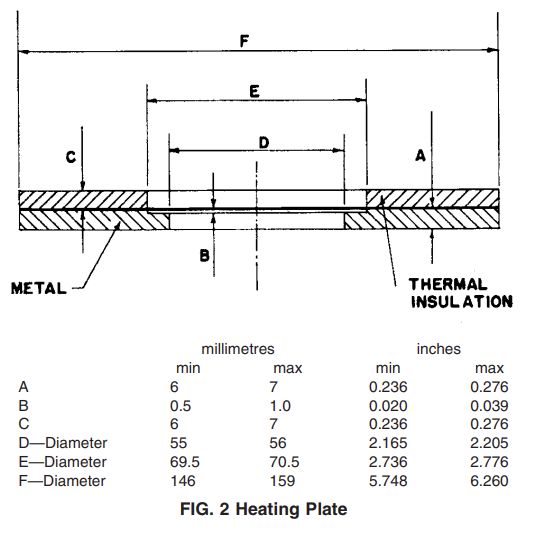
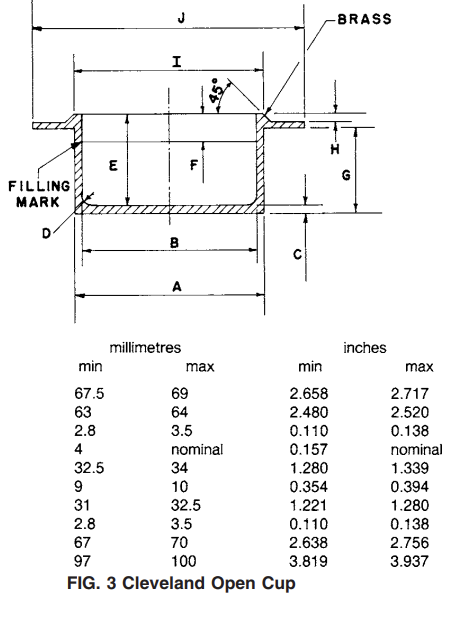
The principal components of a Cleveland Open Cup system include:
- Cleveland open test cup
- Heating plate
- Controlled heater
- Temperature measuring device
- Test flame applicator
- Flame-size reference
- Flame sweep mechanism
- Supporting structure
In an automated instrument, heating-rate control, flame application, flash detection and result recording can be automatically controlled by the system.
General Test Procedure
1. Prepare the Test Cup
The Cleveland test cup must be completely clean and dry before testing.
Any sample residue, gum or carbon deposits from previous measurements should be removed.
2. Fill the Sample
Introduce the test specimen into the Cleveland open cup until the upper surface of the sample is level with the specified filling mark.
At least approximately 70 mL of sample is required for each test.
Air bubbles or foam on the specimen surface should be removed before starting the measurement.
3. Position the Temperature Sensor
The temperature measuring device is positioned vertically in the test cup at the location specified by ASTM D92.
Correct sensor positioning is important because the measured temperature is directly used for determination of the flash and fire points.
4. Adjust the Test Flame
The test flame is adjusted to a diameter of approximately:
3.2 to 4.8 mm
Natural gas, methane, butane or propane flames may be used as described by the method.
The flame applicator passes the ignition flame across the surface of the test specimen during the measurement.
5. Start Heating
The specimen is initially heated at a controlled rate.
As the expected flash point is approached, the heating rate is adjusted so that during the final 28°C before the expected flash point, the specimen temperature increases at:
5 to 6°C/min
Precise heating-rate control is important because ASTM D92 is a dynamic test method, and the result depends on the specified temperature-rise conditions.
6. Apply the Test Flame
When the specimen temperature reaches approximately:
28°C below the expected flash point
the test flame is passed across the center of the cup.
The flame application is then repeated at temperature readings corresponding to 2°C intervals.
Each flame sweep is performed smoothly across the specimen surface in approximately:
1 ± 0.1 seconds
The direction of flame travel is alternated between successive applications in the manual procedure.
Detecting the Flash Point
As the specimen temperature increases, the concentration of flammable vapour above the liquid increases.
During each flame application, the vapour layer is exposed to the ignition source.
When a distinct flame appears and instantaneously propagates across the surface of the specimen, the corresponding specimen temperature is recorded as the:
FLASH POINT
The appearance of a blue halo around the ignition flame without propagation across the specimen surface should not be interpreted as the flash point.
Determining the Fire Point
After determining the flash point, the test may be continued to determine the fire point.
The specimen continues to be heated at:
5 to 6°C/min
and the ignition flame continues to be applied at 2°C intervals.
When application of the test flame causes the specimen to ignite and the combustion continues for:
≥ 5 seconds
the corresponding temperature is recorded as the:
FIRE POINT
Barometric Pressure Correction
Flash point and fire point results are referenced to a standard atmospheric pressure of:
101.3 kPa (760 mmHg)
The ambient laboratory barometric pressure is therefore recorded during the test.
When atmospheric pressure differs from the reference pressure, the observed flash or fire point is corrected according to the calculation specified by ASTM D92.
The corrected result is then rounded to the nearest:
1°C
and reported as the ASTM D92 Cleveland Open Cup flash point or fire point.
Automated Cleveland Open Cup Tester
ASTM D92 also permits the use of an automated Cleveland Open Cup apparatus, provided that it performs the required test procedure.
An automated instrument can integrate:
- Automatic sample heating
- Programmable heating-rate control
- Electronic temperature measurement
- Automatic test-flame application
- Controlled flame sweep
- Automatic flash detection
- Fire-point detection
- Barometric pressure measurement/correction
- Automatic result recording
- Safety monitoring
- Digital test reports
Automation reduces operator-dependent actions while maintaining the procedural conditions required by the test method.
Instrument Performance Verification
The performance of the apparatus should be verified using an appropriate Certified Reference Material (CRM) with a method-specific flash point close to the expected operating range.
ASTM D92 specifies periodic performance verification and provides requirements for checking the temperature-measurement system and, where applicable, the automatic flash-detection system.
Test Environment
The apparatus should be installed on a:
Level and stable surface
and testing should be performed in a:
Draft-free environment
Air movement across the test cup can disturb the vapour layer above the specimen and affect the test result.
A suitable draft shield may therefore be incorporated into the instrument.
Typical Applications
The Cleveland Open Cup method is used for evaluating high-flash-point petroleum products and related materials within the applicability of ASTM D92.
Typical laboratory applications include:
Lubricating Oils | Base Oils | Petroleum Products | Bituminous Materials | High-Flash-Point Fluids
Flash-point measurement is widely used in:
Quality Control | Product Development | Material Characterization | Safety Classification | Incoming Material Inspection
Important Test Parameters
Method: Cleveland Open Cup
Standard: ASTM D92
Typical Applicable Flash-Point Range: >79°C to <400°C
Sample Requirement: Approximately 70 mL
Final Heating Rate: 5–6°C/min
Flame Application: Every 2°C near the expected flash point
Test Flame Diameter: 3.2–4.8 mm
Fire Point Criterion: Sustained burning for at least 5 s
Reference Atmospheric Pressure: 101.3 kPa
Result Reporting: Corrected and rounded to nearest 1°C
Why Controlled Test Conditions Matter
ASTM D92 is a dynamic measurement method. The measured flash point depends not only on the material but also on the apparatus configuration and operating procedure.
Accurate control of:
Heating Rate + Temperature Measurement + Flame Size + Flame Position + Flame Sweep + Airflow
is therefore essential for reliable and repeatable results.
For this reason, an automated Cleveland Open Cup tester should reproduce these test conditions in a controlled and repeatable manner rather than simply detecting ignition.
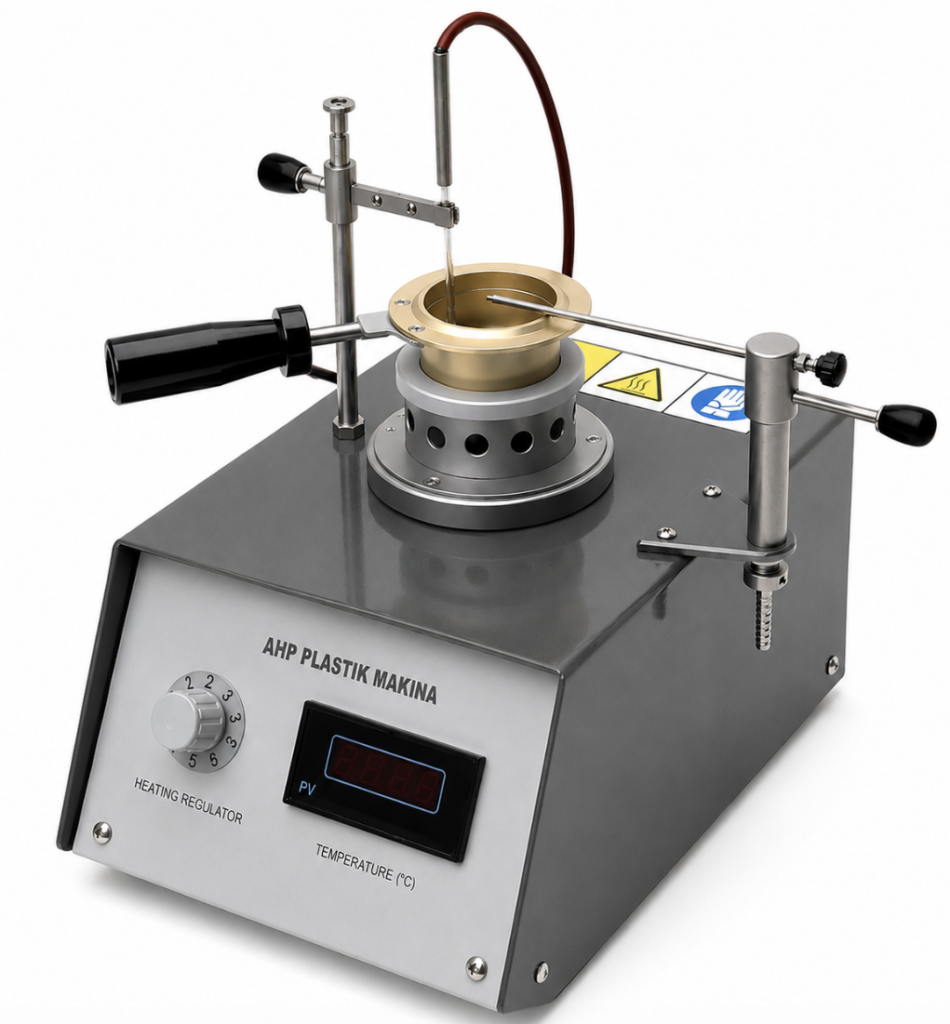
Digital Cleveland Open Cup Flash Point Tester according to ASTM D92
| Technical Parameter | Specification |
|---|---|
| Test Method | Cleveland Open Cup |
| Standard | ASTM D92 |
| Flash Point Range | Above 79 °C up to below 400 °C |
| Sample Volume | Approx. 70 mL |
| Test Cup | Standard Cleveland Open Cup |
| Temperature Measurement | Digital temperature indication |
| Final Heating Rate | 5–6 °C/min (Manual adjustment) |
| Ignition Source | Gas test flame |
| Test Flame Diameter | 3.2–4.8 mm |
| Flame Application Start | Approx. 28 °C below expected flash point |
| Flame Application Interval | Every 2 °C |
| Flame Sweep Time | Approx. 1 ± 0.1 s |
| Flash Point Detection | Distinct flash propagating across the specimen surface |
| Fire Point Detection | Sustained burning for at least 5 s |
| Reference Atmospheric Pressure | 101.3 kPa (760 mmHg)- Gas supply and regulator is not included in standard delivery |
| Result Reporting | Corrected to standard atmospheric pressure and reported to nearest 1 °C- Manual reporting |
| Heating System | Electrically heated Cleveland cup assembly |
| Heating Control | Adjustable heating regulator- Adjust the heating rate by a volume key |
| Temperature Display | Digital |
| Test Flame Position | Adjustable mechanical flame applicator |
| Temperature Probe Position | Adjustable probe holder |
| Installation | Laboratory benchtop |
| Operating Environment | Level, stable and draft-free test area |